How far should you walk an older dog?
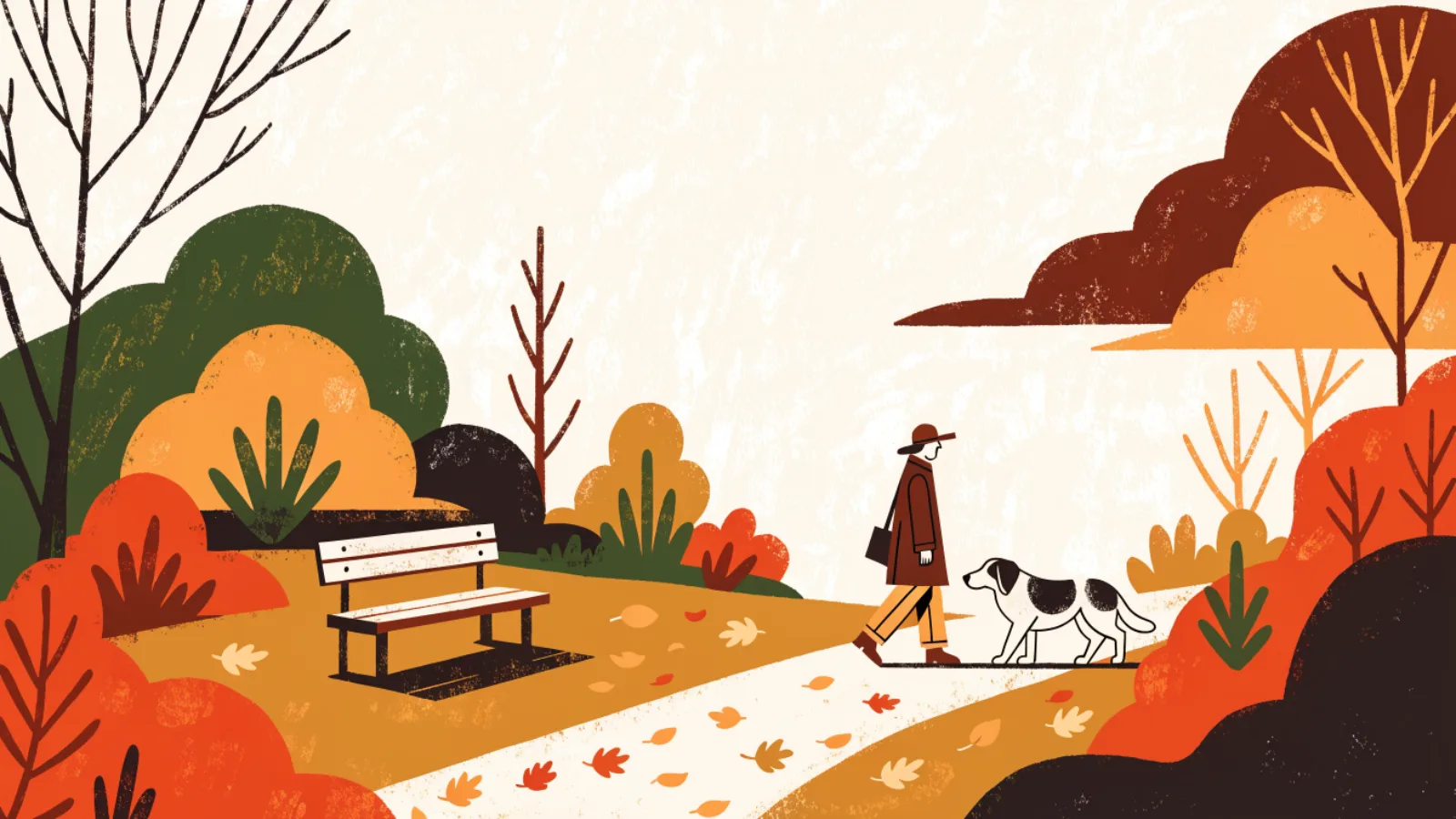
There is no single right distance for an older dog. Let your dog set the pace and split the day into shorter, more frequent walks. For dogs with stiff joints, VCA suggests starting with 10 minutes of walking, three times a day, then adding time weekly only if your dog is not stiffer the next day.
So, how far is right for an older dog?
You grab the leash. Your dog's tail says "yes!" Their back legs say "let's discuss." Somewhere between the front door and the far end of the park, you start to wonder whether the old route is still the right route.
The honest answer: there is no magic number of miles. The right walk is the one your dog finishes happily and wakes up fine from the next day. Vet sources do give useful starting points, though.
VCA's starting point is "10 minutes of walking, three times a day," increased weekly if your dog doesn't get stiffer (VCA). Canine Arthritis Resources and Education (CARE) suggests regular exercise, "ideally 30-60 minutes every day," in total (CARE). Think of these as ranges to work within, not targets to hit.
Why let your dog set the pace?
Because your dog will not tell you when to turn around. Canine Arthritis Management (CAM) puts it bluntly: dogs "will walk until it is too painful or they are too weak," and they don't save energy for the walk home (CAM).
So you become the pacer. Walk at your dog's speed, let them stop to sniff, and turn back while they still look keen. The AKC advises watching "your pace, the weather, and how your dog seems to feel during and after the exercise" (AKC).
Turn around while your dog still wants to keep going. That is the whole trick.
Are shorter, more frequent walks better?
For most stiff dogs, yes. VCA recommends frequent, short walks because they limit the long rest periods in which joints stiffen up (VCA). Three 10-minute strolls also give you three chances to read your dog, instead of one long walk where trouble shows up a mile from home.
Slow sniffing counts. Cornell's Riney Canine Health Center notes that senior dogs or those with arthritis "may have difficulty walking," and describes a senior dog who "loved uninterrupted time to sniff" (Cornell). On low days, a sniff walk around the block is a good walk. Our 10 gentle games for older dogs has more ideas for those days.
What surfaces are easiest on stiff joints?
| Surface | Good for older dogs? | Why |
|---|---|---|
| Short, flat grass | Yes | Firm, even and forgiving |
| Packed dirt trail, level | Yes | Soft, if not rocky or steep |
| Sand | Sometimes | AKC lists it as ideal; keep to firm, flat stretches |
| Asphalt | Short stretches | Hard on pads, hot in summer |
| Gravel, rocks, steep hills | Avoid | Uneven, slippery, more strain |
CAM suggests swapping hard ground for "firm, predictable flat short grass" (CAM). The AKC names grass and sand as ideal, and warns that asphalt and gravel can hurt paw pads, especially in warm weather (AKC). CARE suggests "a level trail that doesn't have much of an incline" (CARE).
How do I warm up an older dog?
VCA advises warming your dog up before any ball play (VCA). The same idea makes sense for walks: spend the first few minutes at a slow amble, let your dog stretch and sniff, then settle into their normal pace. Finish the same way, slow and easy.
What are the signs to stop and head home?
Watch for these on every walk. CAM lists dragging behind, getting "a bit wobbly," stumbling, scuffing feet and seeming distracted as signs of fatigue, and says to "turn around and head home sooner rather than later" (CAM).
- Lagging behind or stopping often
- Wobbly back end, scuffing toes, stumbling
- Heavy panting on a cool day
- Sitting or lying down mid-walk
- Limping, even slightly
- Looking back toward home
The next-morning stiffness check
The real test of a walk comes later. CARE says that if your dog is more sore or limping more "at the end of the hike, later in the day or the following day," the outing was too much, and the next one should be shorter and easier (CARE). CAM uses the same check for terrain (CAM).
- That evening: does your dog get up from their bed as easily as usual?
- Next morning: any extra stiffness, slowness on stairs or reluctance to go out?
- If yes: make the next walk shorter and easier, as CARE suggests, and keep it flat.
- If no for a week: add a few minutes, as VCA suggests, one change at a time.
How does weather change the walk?
The AKC says older dogs "are more sensitive to changes in temperature," hot or cold (AKC). VCA adds that "cold, damp conditions may worsen stiffness and discomfort" (VCA).
- Hot days: walk early or late, stick to grass and shade, and test pavement with your hand.
- Cold, wet days: go shorter and more often, dry your dog off after, and consider a coat for short-coated dogs.
- Icy days: skip slippery routes. A sniff game indoors is fine.
What to do next
- Swap one long walk for two or three shorter ones this week.
- Use the next-morning check after every change.
- Look at the bigger picture. Shorter walks can be one of the 8 everyday signs your dog's mobility is changing. Weight matters too: our rib check guide explains why weight matters for joints.
- Make home easier with our 12 small changes for stiff joints.
Questions owners ask
How long should I walk my old dog?
Start with what your dog manages comfortably, then adjust. For dogs with osteoarthritis that are not on an exercise plan yet, VCA suggests 10 minutes, three times a day, increasing weekly if stiffness does not get worse. CARE suggests that dogs with osteoarthritis exercise regularly, ideally 30 to 60 minutes a day in total. Your vet can tailor this to your dog.
Is one long walk or several short walks better for a senior dog?
Several short walks usually suit a stiff dog better. VCA notes that frequent, short walks cut down the long rest periods in which joints stiffen. Two or three short outings also make it easier to stop before your dog gets tired, since many dogs keep going until they are sore.
Should I still walk my dog if they are stiff?
Gentle, regular movement is usually encouraged for dogs with stiff joints, but stiffness that is new, sudden or getting worse needs a vet visit first. If your dog is stiff after a walk, the AKC suggests shortening your outings. Limping, yelping or refusing to walk are reasons to stop and call your vet.
What temperature is too hot or cold to walk an older dog?
There is no single cutoff, because breed, coat and health all matter. The AKC notes that older dogs are more sensitive to heat and cold, and VCA says cold, damp conditions may worsen stiffness. Walk in the cool part of the day in summer, keep winter walks shorter, and consider a coat for short-coated dogs.
Sources
- Exercising dogs with osteoarthritis (Williams). VCA Animal Hospitals, 2026
- Lifestyle modifications for dogs with OA. Canine Arthritis Resources and Education, 2026
- How to provide your senior dog with proper exercise (Finlay). American Kennel Club, 2026
- Modifying exercise routines. Canine Arthritis Management, 2026
- Ways to exercise a dog with osteoarthritis. Canine Arthritis Resources and Education, 2026
- Canine enrichment ideas (Cohen). Cornell Riney Canine Health Center, 2023
- Helping your dog with osteoarthritis (Weir, Williams, Downing). VCA Animal Hospitals, 2026
- American College of Veterinary Sports Medicine and Rehabilitation. ACVSMR, 2026
Keep reading
 Everyday signs and senior mobilityIs it just age? 8 everyday signs your dog's mobility is changingSigns your dog is slowing down: slower to get up, lagging on walks, pausing at stairs. What 8 everyday changes can mean, when to see a vet, and a monthly check.
 Everyday signs and senior mobilityMy dog stopped jumping on the couch: what it can mean and what to doDog not jumping on the couch anymore? Common reasons, from sore joints and back pain to slippery floors, the red flags that need a vet, and how to help at home.
 Choosing and using a joint chewHow long do joint supplements take to work in dogs?Sources say 4 weeks to 2+ months, and canine trials ran 6 to 13 weeks. See timelines by ingredient, a 30/60/90-day tracking checklist and when to see your vet.
 Everyday life with an older dogA dog-friendly home for stiff joints: 12 small changesHow to help a senior dog with mobility at home: 12 small changes, from non-slip rugs and couch ramps to orthopedic bed placement, plus a 15-minute home audit.
This guide is general information for dog owners, not veterinary advice. If your dog is limping, in pain, or changes suddenly, see your vet. GoodYears Mobility is a supplement: these statements have not been evaluated by the FDA, and it is not intended to diagnose, treat, cure, or prevent any disease.