Is it just age? 8 everyday signs your dog's mobility is changing
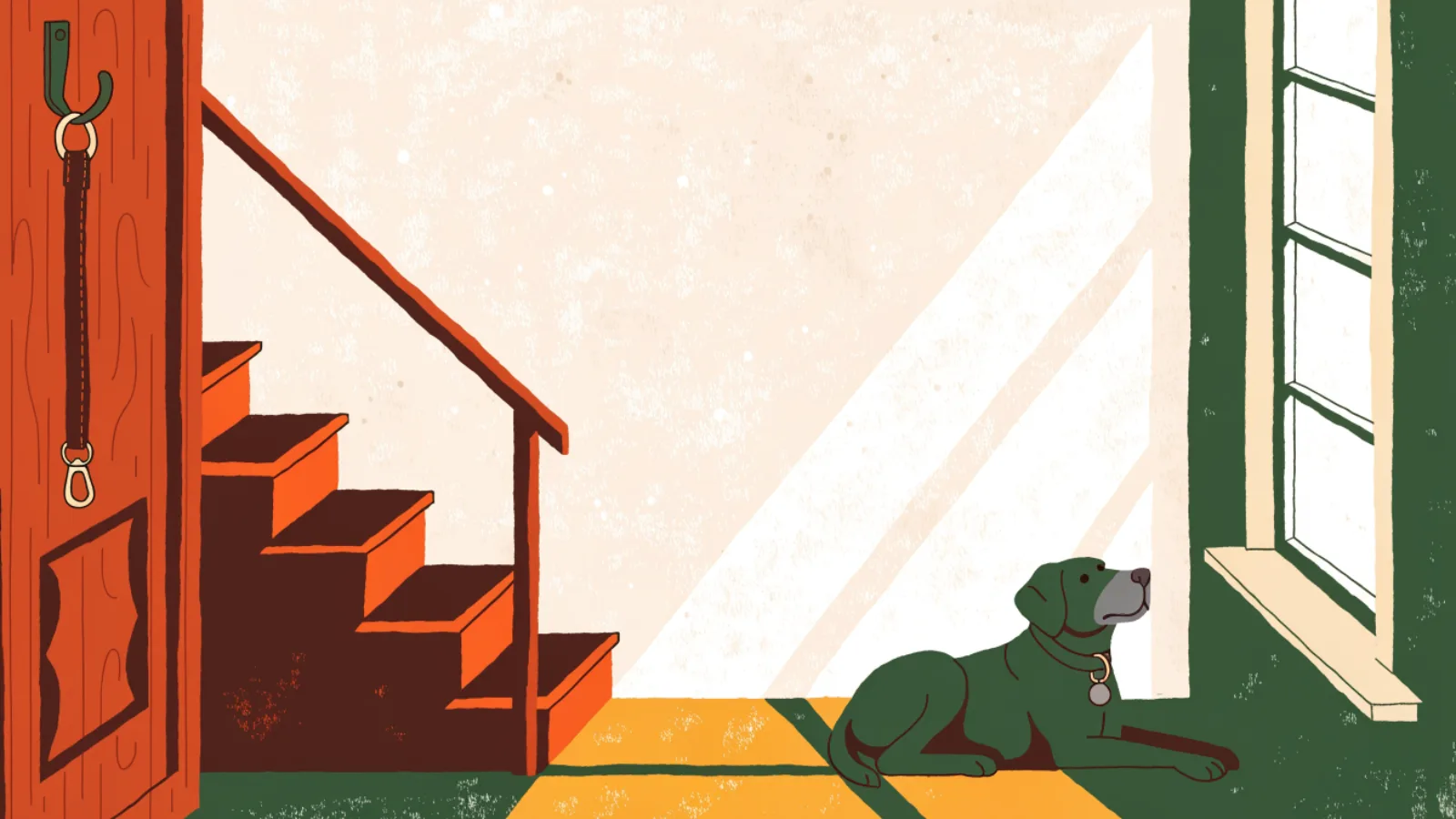
The most common signs are being slower to get up, lagging or stopping on walks, hesitating at stairs, the car or the couch, sleeping more, licking joints, sitting differently and playing less. Some of this is normal aging, but vets list each one as a possible sign of joint discomfort, so it is worth a vet check.
| Signs to watch | 8 everyday changes, from getting up to playtime |
|---|---|
| Typical age at diagnosis | 8 to 10 years, per CARE |
| Young dogs too | 40% of dogs under 4 had arthritis on X-rays in research CARE cites |
| Home check | Once a month, same day, same notes |
Is my dog slowing down, or is it just age?
Often it is a bit of both. Dogs do change with age, but many of the changes owners file under "just getting old" are the same ones vets list as possible signs of joint discomfort.
Arthritis is common and often noticed late. Canine Arthritis Resources and Education (CARE) says most dogs are not diagnosed until 8 to 10 years old, and that the signs "can be subtle if we don't know what to look for" (CARE). It is not only an old-dog issue: CARE cites research finding that 40% of dogs under 4 years old had evidence of arthritis on X-rays (CARE).
The good news is that you do not need special equipment to notice change. You need to know what to watch, and to watch the same things regularly.
What are the 8 everyday signs your dog's mobility is changing?
1. Slower to get up
What you see: a pause before standing, getting up front end first, or a small groan.
What it can mean: VCA's veterinarians list "reluctance to get up, once lying down", using the front legs to "pull" up instead of pushing with the back legs, and groaning on standing or lying down as possible signs of pain (VCA). Cornell includes "difficulty getting up from lying down" among the signs of osteoarthritis (Cornell). If it is worst after a long sleep and eases after a few minutes, note that pattern for your vet.
2. Lagging behind on walks
What you see: your dog drifts behind, turns for home earlier, or the usual loop takes longer.
What it can mean: VCA lists "slowing down on walks" as one of five early signs of osteoarthritis (VCA). PetMD notes that walks may become shorter as a dog tires more easily (PetMD). Heart, breathing and eyesight changes can slow a dog down too, which is why a vet check matters.
3. Hesitating at stairs, the car or the couch
What you see: a pause at the bottom step, waiting to be lifted into the car, or no longer hopping onto the couch.
What it can mean: reluctance to use steps or jump onto or off furniture is on VCA's list of early osteoarthritis signs (VCA), and PetMD mentions getting in and out of the car (PetMD). Our guide on what it can mean when your dog stops jumping on the couch covers this one in depth.
4. Sitting or lying down during walks
What you see: your dog sits at every stop, or lies down on the sidewalk while you chat to a neighbor.
What it can mean: VCA lists "preferring to sit rather than to stand, and to lie down rather than to sit, when stopping during a walk" as a possible sign of pain (VCA). It is easy to read as tiredness or stubbornness.
5. Sleeping more
What you see: longer naps, less interest in following you from room to room.
What it can mean: PetMD lists tiring more easily and resting or sleeping more among the signs of arthritis (PetMD). The AKC lists lethargy (AKC). VCA adds that "some dogs in pain sleep more, while others sleep less", so restlessness at night counts too (VCA).
6. Licking or chewing at a joint
What you see: repeated licking at a wrist, knee or hip, sometimes with a damp or thinning patch of fur.
What it can mean: VCA mentions "licking obsessively at areas of the body that are painful" (VCA), and PetMD notes that licking and chewing can inflame the skin and cause hair loss (PetMD).
7. Changes in posture or the way your dog sits
What you see: a "lazy sit" with back legs splayed to one side, a rounded back, or weight shifted onto the front legs.
What it can mean: VCA lists changes in posture, including how a dog sits or lies down, among early osteoarthritis signs (VCA). Its pain guide describes sitting with rear legs splayed instead of tucked, and standing with front legs back under the chest to take weight off the hips (VCA).
8. Less interest in play
What you see: fewer zoomies, a shorter game of fetch, or ignoring the toy basket.
What it can mean: VCA and the AKC both list reluctance to play (VCA; AKC). VCA also mentions "less energy or decreased endurance" for favorite activities such as walks, ball games or swimming (VCA).
How can I check my dog's mobility at home each month?
Pick one day a month, such as the first Sunday, and note the same things each time. A short phone video of your dog getting up after a nap and walking across the room is useful to show your vet.
| What to check | How to check it | Write down |
|---|---|---|
| Getting up | Watch the first rise after a nap of 1 hour or more | Seconds to stand; front legs first? Any groan? |
| Walk | Your usual route at your usual pace | Minutes; stops; sitting or lying down? |
| Stairs | Up and down your usual flight | Pause at the bottom? Bunny-hop on the way up? |
| Car and couch | One jump onto the couch or into the car | Jumped, hesitated, or needed a lift |
| Sitting | Ask for a sit on a non-slip floor | Legs tucked or splayed to one side |
| Play | 5 minutes of a favorite game | Keen, short-lived, or not interested |
| Licking | Look at wrists, knees and hips | Damp or thin patches |
| Weight | Weigh, or ask your vet for a body condition score | Weight in lb |
Weight belongs on the list because the AKC notes that excess weight on damaged joints is painful and can speed cartilage breakdown (AKC). If you prefer a guided version, our mobility quiz walks through similar questions.
Look for the trend across 2 or 3 months, not a single bad day.
What can I change at home right now?
These are simple, low-risk changes that vets commonly suggest. Cornell lists weight control, low-impact activity such as leash walks or swimming, and non-slip rugs or ramps (Cornell). A veterinarian writing for dvm360 suggests yoga mats, rugs or runners in high-traffic areas for grip, pet ramps or stairs for furniture, and orthopedic or memory foam beds (dvm360).
- Lay a runner along the slipperiest route your dog uses every day.
- Give your dog a minute to stretch and move before stairs or the car.
- Keep walks regular and gentle rather than long weekend marathons.
- Ask your vet what a lean weight looks like for your dog.
When should I see a vet about these signs?
Mention any of the 8 signs at your next visit, even if they seem minor. Call sooner in these situations:
- A limp that does not settle within an hour, or soreness when you touch the neck or back (VCA).
- A change that is sudden, severe or on one side only.
- Any mobility change in a young dog.
- Eating less, panting while resting, or trembling in the back legs alongside the change (VCA).
Your vet may suggest weight management, exercise changes, rehabilitation or prescription pain medication, which Cornell lists among the main options (Cornell).
If you are also wondering about joint supplements, keep expectations realistic. CARE says not to expect improvement from oral joint supplements before 1 month (CARE). A 2022 meta-analysis of 72 trials found omega-3 the best-supported class, while most glucosamine and chondroitin trials showed no effect on pain (Barbeau-Grégoire et al.).
Our guide to what the research on dog joint supplements actually shows explains each ingredient, and how long joint supplements take to work covers timing.
What to do next
- Run the monthly check this week to set your baseline, and film one get-up after a nap.
- Book a vet visit if you noticed any of the signs, and call promptly for any urgent one above.
- Make one home change, such as a runner on a slippery floor.
- Read next: my dog stopped jumping on the couch: what it can mean.
Questions owners ask
Is it normal for an old dog to sleep more?
Older dogs often do rest more, but more sleep can also be a sign of discomfort. PetMD lists tiring more easily and sleeping or resting more among signs of arthritis, and VCA notes that some dogs in pain sleep more while others sleep less. If the change comes with stiffness, shorter walks or less play, mention it to your vet rather than putting it down to age.
Why is my dog slow to get up in the morning?
Stiffness after a long rest that eases once your dog moves around is a pattern vets associate with joint discomfort. PetMD describes a limp that is worse on first rising and less noticeable once a pet warms up. Weight, lost muscle and slippery floors can add to it. Note how long the stiffness lasts and share that with your vet.
Is my senior dog slowing down on walks just old age?
It can be, but VCA lists slowing down on walks as one of five early signs of osteoarthritis, and Cornell lists reduced activity among its signs. Other causes, such as heart, breathing or eyesight changes, also need ruling out. A vet exam is the only way to know which applies, and it gives you a baseline for later.
Should I start my dog on a joint supplement if I notice these signs?
See your vet first, so nothing treatable gets missed. If you then try a supplement, expect modest, slow changes: Canine Arthritis Resources and Education says not to expect improvement before 1 month. A 2022 meta-analysis found omega-3 the best-supported class, with weaker results for glucosamine and chondroitin. A supplement should never replace pain care your vet prescribes.
When is a mobility change urgent?
Call your vet promptly for a limp that does not settle within an hour, soreness when the neck or back is touched, or any sudden, severe or one-sided limping. VCA says to go to an emergency hospital if your dog cannot stand or walk without help, or is limping after major trauma. A young dog with a mobility change also deserves a prompt visit.
Sources
- Arthritis: The Basics. Canine Arthritis Resources and Education, 2024
- Five signs your pet has osteoarthritis. VCA Animal Hospitals, 2026
- How Do I Know if My Dog Is in Pain?. VCA Animal Hospitals, 2025
- Osteoarthritis. Cornell University College of Veterinary Medicine, 2025
- 7 Signs Your Dog or Cat May Be Suffering from Arthritis. PetMD, 2012
- Osteoarthritis in Dogs: Signs, Symptoms, Treatments. American Kennel Club, 2026
- Home hacks for geriatric dogs and cats. dvm360, 2025
- Pain or limping: when to seek care. VCA Animal Hospitals, 2026
- How quickly should I see improvements in my dog?. Canine Arthritis Resources and Education, 2026
- A 2022 systematic review and meta-analysis of enriched therapeutic diets and nutraceuticals in canine and feline osteoarthritis (Barbeau-Grégoire et al.). International Journal of Molecular Sciences, 2022
Keep reading
 Everyday signs and senior mobilityMy dog stopped jumping on the couch: what it can mean and what to doDog not jumping on the couch anymore? Common reasons, from sore joints and back pain to slippery floors, the red flags that need a vet, and how to help at home.
 Choosing and using a joint chewHow long do joint supplements take to work in dogs?Sources say 4 weeks to 2+ months, and canine trials ran 6 to 13 weeks. See timelines by ingredient, a 30/60/90-day tracking checklist and when to see your vet.
 Ingredients and evidenceDo joint supplements work for dogs? What the research actually showsDo dog joint supplements work? Omega-3 has the strongest research, green-lipped mussel is mixed, glucosamine and chondroitin lean negative. See the evidence.
 Everyday signs and senior mobilityWhy is my dog stiff after sleeping? What owners notice, what vets check, and a simple daily routineStiff after naps but fine once moving? Common reasons dogs get stiff after rest, the red flags that mean a vet visit, and a simple daily routine that helps.
This guide is general information for dog owners, not veterinary advice. If your dog is limping, in pain, or changes suddenly, see your vet. GoodYears Mobility is a supplement: these statements have not been evaluated by the FDA, and it is not intended to diagnose, treat, cure, or prevent any disease.