How to choose a joint supplement for dogs: 9 things to check on the label before you buy

Start with what your dog can eat: check the flavor source and every allergen. Then look for mg per chew for each active ingredient, not a blend total, and a dose chart by weight. Work out chews and cost per day for your dog's size, then check storage, autoship terms, quality signals and the evidence behind each ingredient.
| Common owner complaint | The dog refuses the chew |
|---|---|
| Number to look for | mg per chew for each active ingredient |
| Cost per day | (price ÷ chews in container) × chews per day |
| Best-supported ingredient class | Omega-3 (fish oil) |
| NASC seal tells you | Quality checks, not whether it works |
How do you choose a joint supplement for dogs?
Work from your dog outward: can they eat it, how much of each active is in a chew, what it costs per day, and what the research says. The nine checks below come from common owner complaints across many brands.
1. Will your dog actually eat it?
A common complaint: the dog won't eat it, sometimes after months of eating it happily, sometimes even when it is broken up or hidden in food. Check the flavor (and what it is made from), chew size in grams, whether it splits, and whether the guarantee covers refusal. With a picky dog, buy the smallest size first.
2. What is the flavor made from, and what are the allergens?
A flavor name is not an ingredient list. "Natural flavors" can come from a protein your dog reacts to, and some owners of dogs with chicken or beef allergies report reactions. Read the full panel.
The actives carry allergens too. Glucosamine is often made from shellfish, and green-lipped mussel is a shellfish; PetMD advises avoiding it in dogs with a shellfish allergy (PetMD). Chondroitin comes from animal cartilage, so check which animal. Flours, soy and yeast are common binders.
3. Does it show mg per chew, or just a blend?
You can only compare what you can see.
Look for each active ingredient in mg per chew. Watch for a proprietary blend with one total weight (you know what is in it, not how much of each), amounts quietly given "per 2 chews," and front-of-pack totals that add several ingredients together.
Some retailer listings show no glucosamine or chondroitin amounts at all, so ask the brand. One veterinarian quoted in dvm360 suggests asking manufacturers for their research and treating "none" as a major red flag (dvm360).
4. Is there a clear dose chart by weight?
A useful label gives weight bands in pounds, chews per band, and says whether there is a higher starting amount. One veterinarian quoted in dvm360 describes loading at twice the maintenance amount for 4 to 6 weeks (dvm360), which empties a container faster. If the chart stops at "large dogs," ask what a 90 lb dog takes. See our glucosamine dose by weight guide.
5. How many chews a day, and what does that cost for your dog?
A container empties fast at 3 or 4 chews a day. Compare cost per day, not price per jar:
6. How should it be stored, and what does a fresh chew look like?
Hard or dry chews, an "off" smell and mold soon after opening all recur in owner complaints. A fresh soft chew bends or breaks cleanly and smells like your last jar. Look for a printed best-by date and lot number, storage directions and a resealing lid, and ask whether the brand tells customers when a recipe changes. If chews smell off or show mold, stop and contact the brand.
7. What are the subscription and autoship terms?
For some direct-to-consumer brands, the loudest complaints are about billing, not the chew: shipments after a skip request, renewals with no reminder, hard cancellations. Before checkout, check that:
- any subscription is optional
- you can skip or cancel online in one step
- you get a reminder before each charge
- the guarantee covers opened jars
8. Which quality signals matter, and what do they mean?
Dog joint supplements are not FDA approved. The FDA does not apply the human supplement law (DSHEA) to animal products, treating each as a food or a drug depending on its claims (IVC Journal). Each quality signal answers a narrow question.
| Signal | What it tells you | What it does not tell you |
|---|---|---|
| NASC Quality Seal | The company passes a facility audit every 2 years and its products face random independent testing against label claims (IVC Journal). Cornell suggests looking for it (Cornell). | Whether the ingredients help dogs, or whether amounts match study doses |
| "Made in the USA" | Where the product was made | Where each ingredient came from |
| Certificate of analysis, on request | What a lab measured in one batch | Other batches |
| Disease claims, for example about arthritis | A drug-type claim, since the FDA classes animal products by intended use (IVC Journal) | That the product was approved for anything |
9. What evidence do the ingredients actually have?
| Ingredient | What canine research shows |
|---|---|
| Omega-3 (fish oil) | The best-supported class. A 2022 meta-analysis of 72 trials found only 2 of 20 omega-3 trials non-effective (Barbeau-Grégoire et al.); a 2012 systematic review rated evidence low for all nutraceuticals except omega-3 in dogs (Vandeweerd et al.); Cornell agrees (Cornell). |
| Green-lipped mussel | Modest and mixed. A 2006 trial of 81 dogs found owner-reported gains at day 56, none at day 28 (Pollard et al.). A 2009 trial (15 dogs per group) improved scores against placebo but not on force plates, and trailed carprofen (Hielm-Björkman et al.). dvm360 notes that studies "do not demonstrate consistent improvement" (dvm360). |
| Glucosamine + chondroitin | Mixed, leaning negative for pain: 88.9% of these trials showed no effect in the 2022 meta-analysis (Barbeau-Grégoire et al.), and a 2003 force-plate trial in 71 dogs found no gait gain (Moreau et al.). Cornell notes that "few other than fish oil have been definitively proven" to help slow joint degeneration (Cornell). |
| MSM | No published canine efficacy research (dvm360); the 2022 meta-analysis found it only in multi-ingredient products (Barbeau-Grégoire et al.). |
Nearly all these trials enrolled dogs already diagnosed with osteoarthritis and tested ingredients, not the chew in your cart. Amounts matter: a commonly cited figure for green-lipped mussel, given by Cornell and dvm360, is 77 mg per kg a day, about 2,600 mg for a 75 lb dog. Our guide to the research and glucosamine vs green-lipped mussel comparison go deeper.
Printable checklist: 9 label checks at a glance
| # | Check | Look for | Ask the brand if missing |
|---|---|---|---|
| 1 | Will my dog eat it? | Flavor, chew size, splittable | Does the guarantee cover refusal? |
| 2 | Allergens | Full ingredients, flavor source, shellfish, grains, soy | What is the flavor made from? |
| 3 | mg per chew | Each active in mg, no blend total | mg of each active per chew |
| 4 | Dose by weight | Bands in lb, loading phase stated | What does my dog's size take? |
| 5 | Cost per day | Count and chews per day | How long does a container last? |
| 6 | Freshness | Best-by date, lot number, storage | Will you tell me of recipe changes? |
| 7 | Autoship | Optional, one-step cancel, reminders | Are opened jars covered? |
| 8 | Quality signals | What each seal actually covers | Is a certificate of analysis available? |
| 9 | Evidence | Research per ingredient vs amounts | What research is this based on? |
Worked example: the GoodYears Mobility label
We make Mobility, so here is our label through the same checks, including the parts that rule it out for some dogs.
- mg per chew (check 3): glucosamine HCl 500 mg (from shrimp and crab), MSM 400 mg, green-lipped mussel 150 mg, chondroitin sulfate 110 mg (porcine), vitamin C 20 mg, manganese 2.5 mg. No blend.
- Amounts vs research (check 9): glucosamine is the dose-led ingredient. Green-lipped mussel totals 150 to 600 mg a day, well below study amounts and the commonly cited figure. Chondroitin is modest for large dogs. No omega-3. More in why our amounts look the way they do.
- Dose and cost (checks 4 and 5): see the table below. If your dog needs more than 1 chew a day, split them between morning and evening.
| Dog weight | Chews per day | Days per 60-chew jar | Cost per day, 1 jar ($34) | Cost per day, 5 jars ($102) |
|---|---|---|---|---|
| Up to 15 lb | 1 | 60 | $0.57 | $0.34 |
| 15 to 45 lb | 2 | 30 | $1.13 | $0.68 |
| 45 to 75 lb | 3 | 20 | $1.70 | $1.02 |
| Over 75 lb | 4 | 15 | $2.27 | $1.36 |
- Taste and allergens (checks 1 and 2): duck-flavored 4 g soft chews that contain shellfish, with oat flour, rye flour and soy lecithin among the inactives. If your dog reacts to shellfish, pork, grains or soy, Mobility is not the right chew.
- Quality signals (check 8): made in the USA. Mobility does not carry the NASC seal.
- Terms (check 7): no subscription, free US shipping, 90-day money-back guarantee from delivery. The founding batch is a pre-order: 30% deposit now, balance charged when it ships, by February 2027.
Full label: Mobility product page. Daily amounts: FAQ.
What to do next
- Talk to your vet first if your dog takes medication (NSAIDs, blood thinners, insulin), is pregnant or used for breeding, or has a shellfish allergy.
- See a vet promptly for sudden, severe or one-sided limping, signs of pain, or a young dog with mobility changes.
- Print the checklist and photograph each label you compare. For a fair side-by-side, see comparing Cosequin alternatives.
Questions owners ask
Is a proprietary blend in a dog supplement a bad sign?
Not always, but it limits what you can check. A proprietary blend lists the ingredients and one total weight, so you cannot see how much glucosamine, chondroitin or anything else is in each chew. That makes it impossible to compare with other products, with study amounts or with your vet's advice. If a label uses a blend, ask the brand for mg per chew of each active ingredient before you buy.
What joint supplement is safe for a dog with food allergies?
There is no single safe choice, because it depends on what your dog reacts to. Read the full ingredient list, not just the flavor name, and check the source of the flavor, the chondroitin and the glucosamine. Glucosamine and green-lipped mussel usually come from shellfish, and flours, soy and yeast are common binders. If your dog is on an elimination diet, ask your vet before adding any chew, since everything by mouth counts.
My dog is picky. How do I get them to take a joint chew?
Start with the smallest container, offer one chew as a treat between meals, and praise the first sniff. If your dog refuses, try breaking it into pieces or pressing a piece into a little of their usual food. Avoid hiding it in something your dog is allergic to. If they still refuse after a few days, use the guarantee rather than forcing it, and check whether the brand covers opened jars.
Does the NASC seal mean a joint supplement works?
No. The NASC Quality Seal means the company passed a facility audit, which repeats every two years, and that its products are subject to random independent testing against label claims. That is a useful quality signal. It does not test whether the ingredients help dogs, or whether the amounts match those used in studies. For that, look at the published evidence for each ingredient and compare mg per chew.
Do I need a loading dose when starting a joint supplement?
Some brands start with a higher amount for the first few weeks. One veterinarian quoted in dvm360 describes loading at twice the maintenance amount for 4 to 6 weeks. Others use the same amount from day one. Follow the label you buy and ask your vet. Whatever the plan, make sure the label states it, because a loading phase changes how fast a container empties and what it costs.
Sources
- Green-lipped mussels for dogs: how they can help. PetMD, 2016
- Implementing an elimination-challenge diet trial: dog. VCA Animal Hospitals, 2026
- Glucosamine. VCA Animal Hospitals, 2025
- Joint supplements for dogs: helpful vs. hype. dvm360, 2017
- Animal supplements and the National Animal Supplement Council (NASC). IVC Journal, 2019
- How joint supplements can help with orthopedic conditions. Cornell Riney Canine Health Center, 2025
- A 2022 systematic review and meta-analysis of enriched therapeutic diets and nutraceuticals in canine and feline osteoarthritis (Barbeau-Grégoire et al.). International Journal of Molecular Sciences, 2022
- Systematic review of efficacy of nutraceuticals to alleviate clinical signs of osteoarthritis (Vandeweerd et al.). Journal of Veterinary Internal Medicine (VetSRev record), 2012
- Clinical efficacy and tolerance of an extract of green-lipped mussel (Perna canaliculus) in dogs presumptively diagnosed with degenerative joint disease (Pollard et al.). PubMed, 2006
- Evaluating complementary therapies for canine osteoarthritis Part I: green-lipped mussel (Hielm-Björkman et al.). Evidence-Based Complementary and Alternative Medicine (PMC), 2009
- Clinical evaluation of a nutraceutical, carprofen and meloxicam for the treatment of dogs with osteoarthritis (Moreau et al.). Veterinary Record (AGRIS record), 2003
Keep reading
 Ingredients and evidenceDo joint supplements work for dogs? What the research actually showsDo dog joint supplements work? Omega-3 has the strongest research, green-lipped mussel is mixed, glucosamine and chondroitin lean negative. See the evidence.
 Dosing and daily amountsHow much glucosamine for a dog? Daily amounts by weightHow much glucosamine for a 10, 30, 50, 60 or 100 lb dog? There is no official dose. See the mg/kg math, the one commonly cited figure, and what labels give.
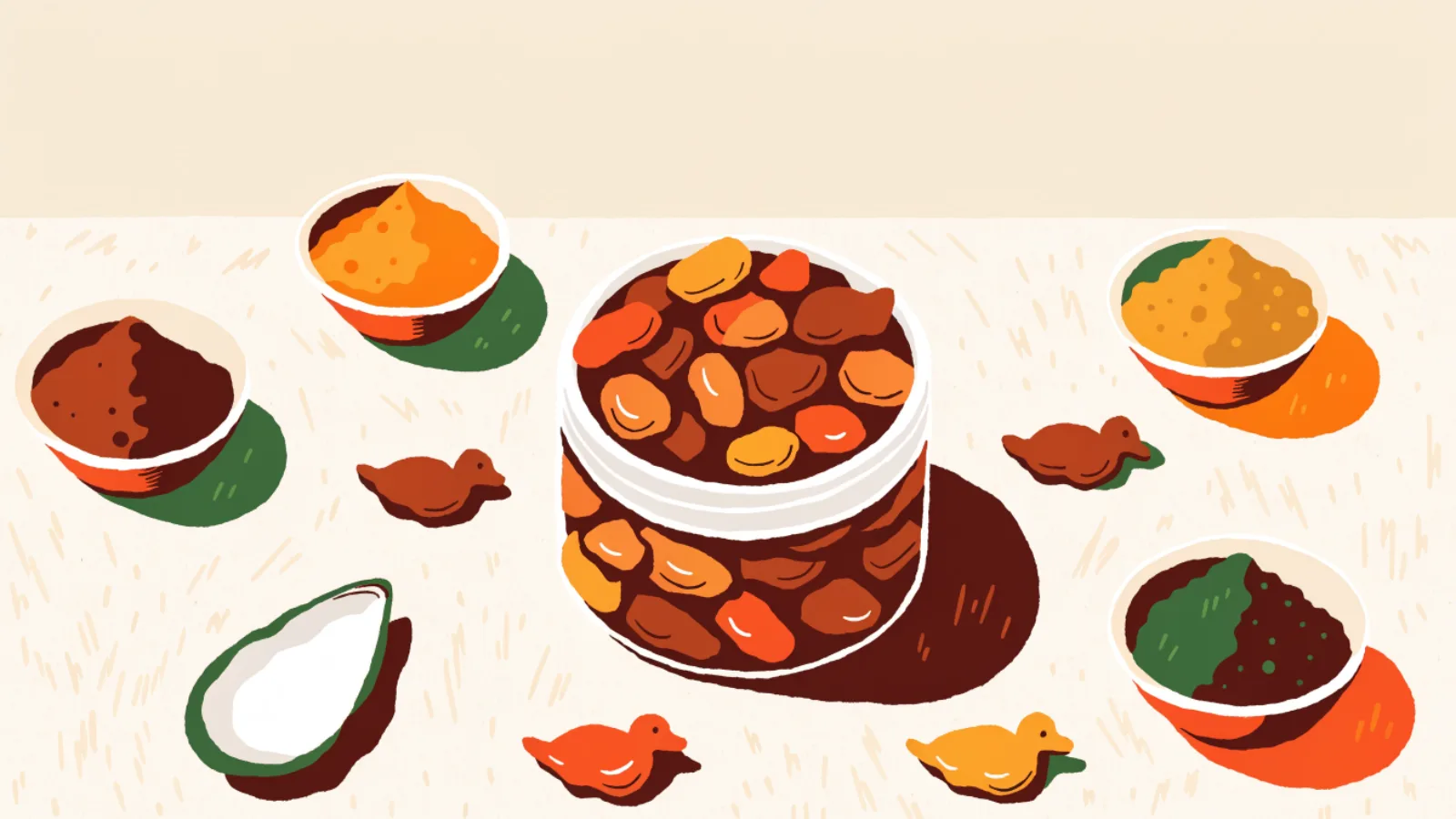 Dosing and daily amountsWhy GoodYears Mobility contains these amounts: ingredients and dosage explainedGoodYears Mobility ingredients by weight: 500 mg glucosamine, 400 mg MSM, 150 mg green-lipped mussel, 110 mg chondroitin per chew, with mg/kg math by dog size.
 Comparisons and alternativesCosequin alternatives for dogs: how to compare joint chews fairlyLooking for a Cosequin alternative for your dog? Compare mg per chew, chews per day, cost per day, flavor and allergens, and how Dasuquin differs from Cosequin.
This guide is general information for dog owners, not veterinary advice. If your dog is limping, in pain, or changes suddenly, see your vet. GoodYears Mobility is a supplement: these statements have not been evaluated by the FDA, and it is not intended to diagnose, treat, cure, or prevent any disease.